What is Spiritualism?
Like so many philosophical, Spiritual or Religious ways of life, the answer will depend on who you ask!
We will do our best to be fair and balance right across the broad range, but will also be clear on what ‘flavour we favour’ here at Littleport.
Spiritualism as a Movement
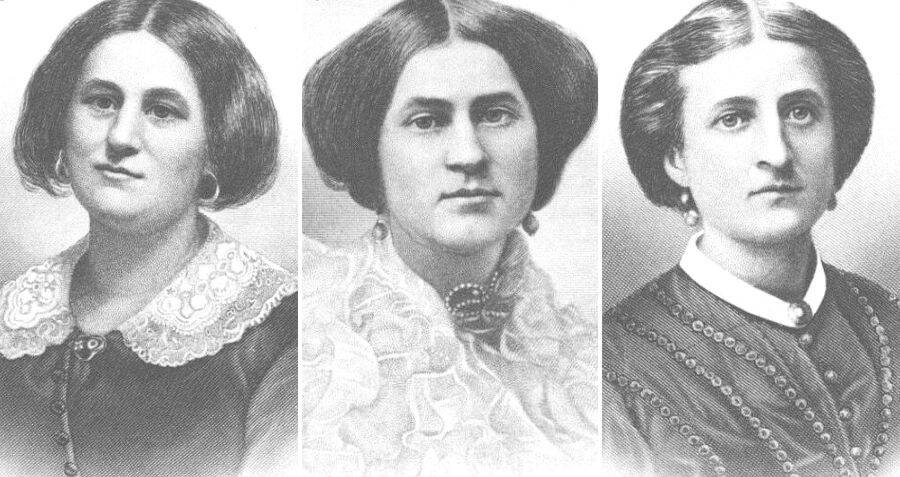
The Spiritualist movement began in the mid-19th century, emerging from a growing interest in communicating with the afterlife. It was sparked by the Fox Sisters in 1848, whose spirit communications in Hydesville, New York, captivated public attention.
Rooted in the belief that the living could receive messages from the dead through mediums, Spiritualism quickly spread across the United States and Europe. Despite skepticism, the movement persisted, evolving into organized churches and philosophical circles that continue to explore the nature of consciousness and the afterlife today.
Spiritualism in Great Britain
Spiritualism took root in Britain in the early 1850s, following its rapid rise in the United States. The movement gained momentum as reports of spirit communication, table-turning, and mediumship demonstrations spread across the country. One of the key figures in its British development was Maria Hayden, an American medium who arrived in 1852 and introduced séances to London society.
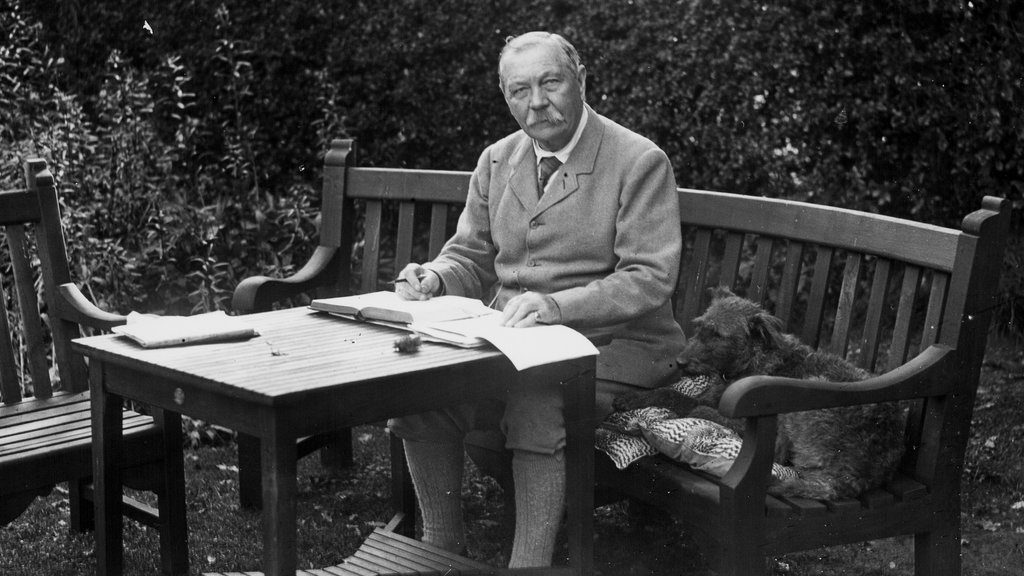
Influential supporters, including scientists, intellectuals, and writers such as Sir Arthur Conan Doyle, helped legitimize Spiritualism as more than mere superstition. By the late 19th century, the movement had established numerous Spiritualist churches and societies, eventually forming the foundation for the modern-day Spiritualists’ National Union (SNU) in 1901.
Emma Hardinge-Britten
Emma Hardinge Britten (1823–1899) was a key figure in the early Spiritualist movement, both in Britain and internationally. Originally from England, she began her career as an actress and musician before becoming involved in Spiritualism after witnessing mediumistic phenomena in the United States. She quickly gained recognition as a gifted trance medium, speaker, and writer, using her abilities to promote Spiritualist philosophy.
A passionate advocate, she traveled extensively, delivering lectures and spreading the teachings of Spiritualism. Her most significant work, Modern American Spiritualism (1870), documented the movement’s early history. She was also instrumental in shaping Spiritualist principles and helped lay the groundwork for the Spiritualists’ National Union (SNU) in Britain.
Mediumship
Mediumship is the practice of communicating with spirits of the deceased or other non-physical entities. A medium serves as an intermediary between the spirit world and the living, conveying messages, guidance, or evidence of life after death.
Mediumship can take many forms, including mental mediumship (where messages are received through thoughts, impressions, or clairvoyance), trance mediumship (where the medium enters an altered state to allow a spirit to speak through them), and physical mediumship (where spirits influence the physical environment, such as through direct voice or materialization). Mediumship is central to Spiritualism, as it provides personal proof of survival beyond death and insight into the interconnectedness of life.
Healing
Spiritualist healing is a practice within Spiritualism that involves channeling healing energy from the spirit world to promote physical, emotional, or spiritual well-being. It is not faith healing, requiring some belief for it to be of impact, and it is certainly not provided as an alternative cure, either. It is based on the belief that spirit healers or guides work through the healer to restore balance and vitality to the recipient.

This healing can be done through hands-on methods, such as laying on of hands, or through distant healing, where intention and energy are directed remotely. Unlike faith healing, which often relies on religious devotion, Spiritualist healing views the process as an interaction between the healer, the recipient, and the spirit world, with the healer acting as a conduit for the healing force.
It is commonly practiced in Spiritualist churches and healing circles, often alongside prayer and meditation, as it is at our meetings.
Christian Spiritualism
Christian Spiritualism blends traditional Christian beliefs with Spiritualist principles, particularly the idea that communication with the spirit world is possible, and in harmony with the work and teachings of Jesus, who would have actually answered to the name Yeshua, in particular the way he taught, and developed the Disciples.
It emerged in the 19th century as some Christians embraced mediumship and spirit communication as evidence of life after death, seeing it as a continuation of biblical miracles and divine revelation.
Unlike mainstream Spiritualism, which is often non-denominational, Christian Spiritualists maintain faith in Jesus Christ as a central figure while also believing in spirit guides and angelic communication.
The movement led to the formation of Christian Spiritualist churches, which combine elements of Spiritualist practice with Christian worship, emphasizing love, healing, and the afterlife as part of God’s divine plan, and that the “Way” the original name prescribed by Yeshua for his movement, and teachings, is not dissimilar to Spiritualism.
The Pagan in Us All
The roots of Spiritualism of course can be traced back to ancient pagan traditions that emphasized communication with the spirit world. Long before the 19th-century movement, many pre-Christian cultures practiced forms of mediumship, ancestor veneration, and divination. In ancient Greece and Rome, oracles and seers acted as intermediaries between the living and the divine, much like modern mediums. Celtic Druidic traditions also involved spirit communication, with sacred sites and rituals used to connect with ancestral spirits. Shamanic practices worldwide, from Indigenous cultures to Norse, incorporated trance states and spirit guidance. These older traditions laid the groundwork for Spiritualisms’ core belief that the soul survives death and can communicate with the living, a concept later reshaped by Christianity and 19th-century Spiritualist philosophy.
Littleport Christian Spiritualists?
Then why is Littleport a Christian Spiritualist Church? Well, in the strictest sense of the word, it is completely, and yet, also not. We follow the original teachings of the way, some of which is sadly lost in modern understanding. We welcome all, we judge not, our doors are open to strangers, because we believe a stranger is a friend in waiting.
Our view, and methodology is that all paths lead to the same truth, that all religions began with a glimmer of truth behind it, and that human interpretation is the cause of difference, problem and difficulty.
To quote a Babylon 5 character, Brother Theo “God goes by many names, perhaps some alien sounding, different faces, and history, but all describing the same Creator. We’ve come here to learn all those names, in hopes of better understanding the one who is behind them…”
At its core, our flavour we favour, is simply put this way – faith is personal, and not one single person can tell you how that relationship works or is shaped, but we can learn about our own, by understanding others.
Faith, true faith, does not require the need to knock, question, or undermine another’s faith (as so often is sadly done by certain other people of faith toward Spiritualism) but in fact by listening to the heart of another, our own heart can find its own understanding.
This is at the core of our work in Littleport – we cannot tell you what God is to you, but we can offer support on that journey of discovery for yourself.
Spiritualism – Religion or Not?
Spiritualism is both a philosophy and, for some, a religion. It is a belief system centered on the idea that the soul survives physical death and that communication between the living and the spirit world is possible. While some Spiritualists view it as a religion, complete with churches, ministers, and services, others see it as a philosophy or science of the afterlife, separate from organized faith. On a legal standpoint, Spiritualism in Great Britain absolutely is a religion, along with all of the legal protections and personal liberties that this word has afforded to it and is to it prescribed in law, in reference to what is defined as a matter of conscience.
However, many independent Spiritualists embrace it as an open-ended practice, integrating its ideas with other religious or philosophical beliefs, and to that end we very much support the notion that you call it as you will, you are still welcome.
Other Religions
The one thing that the Romans did well, all roads leading to the same place. We do not have a ‘different’ God, we believe, as Brother Theo put it, that the source, “Great Spirit” as we call is is the same for all. The differences are generated and perpetuated by us physical beings trying to own it – never a good idea, because this always ends up leading to division, and the inciting of hatred – that somehow the “other” is the enemy, when anyone who has really thought about it, the true enemy is fear, and hate.
We are a particularly wide variety of personal and learned belief systems – and we say the more the merrier!
Philosophy (Just Don’t Get Rev Nick Started on it)
Yes, our Ministry leader does have a love of it – only engage with him on it if you have the time to spare – you have been warned!
Spiritualist philosophy is the foundation of Spiritualism, emphasizing the survival of the soul after physical death, the ability to communicate with spirits, and the moral responsibility of individuals. It teaches that life is a continuous journey of growth and evolution, both in the physical and spiritual realms. Unlike dogmatic religions, Spiritualist philosophy encourages personal experience, critical thinking, and direct communication with the spirit world as a means of understanding truth.
Key principles include the interconnectedness of all life, the law of cause and effect (similar to karma – the sanskrit word for “Action”), and the idea that spiritual progress is infinite. Spiritualist Philosophy is a rich and diverse tapestry, with many ways and means of expression.
Our Principles
Of course, any religious or philosophical gathering needs a starting point, a mutual foundation on which to begin that journey of exploration.
Ours are thus;
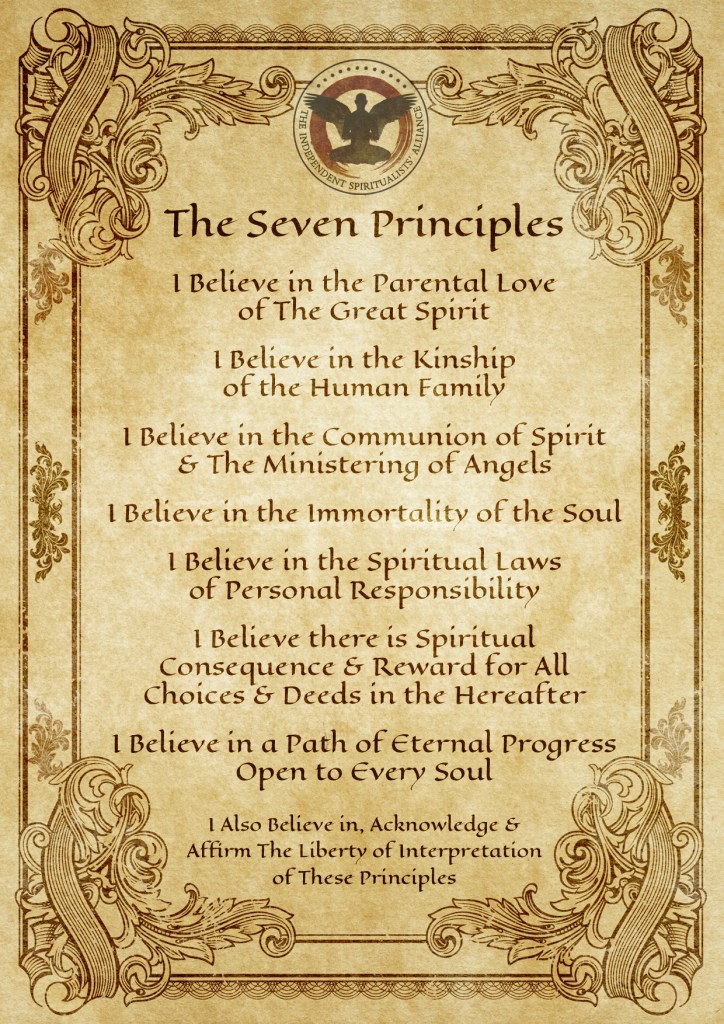
This is just a small tip of the iceberg in terms of answering the original question, but we hope it answers any questions you may have.
Of course, if there are more, come along and see us, or reach our through this website our our social medium pages.
Rest assured, a warm welcome with open heart awaits, because even though there are those who will try and convince you otherwise, we do not summon dark entities, or control the dearly departed, nor is this the work of the devil trying to steal your soul… These are dark reflections and imaginings of minds steeped in fear, not based on genuine evidence of witness of a visit to a Spiritualist church, but stuff of fiction, movies, and fantasy, and we believe that it is exactly where such ideas should stay.
Come along and find out for yourself!
 Littleport Christian Spiritualists